Wooden Floors in Plan Drawing
What is a Herringbone Parquet pattern
The term takes its name as the pattern has a resemblance to the bone of herring fish. In other countries such as Italy it is referred equally 'Spina Pesci', the Spine of Fish.
The design uses rectangular pieces of wood of equal size installed xc° to each other to create 2 lines. The pieces are referred as battens (when used as solid wood 10mm overlay) or blocks (when used as 20mm solid wood).
This uncomplicated pattern has a multitude of options, each providing a unique expect. Other shapes can be used such as parallelograms (Chevron Parquet) and hexagons but since there are so many options with rectangles this design guide will focus on rectangle shapes.
Traditionally with the herringbone wood flooring the length is 5 times the size of the width 5:1. This will allow variations of the patter and so that 5 pieces will ever add together up to a single length. Nonetheless, if laying in a standard herringbone patter the length can be whatsoever size.
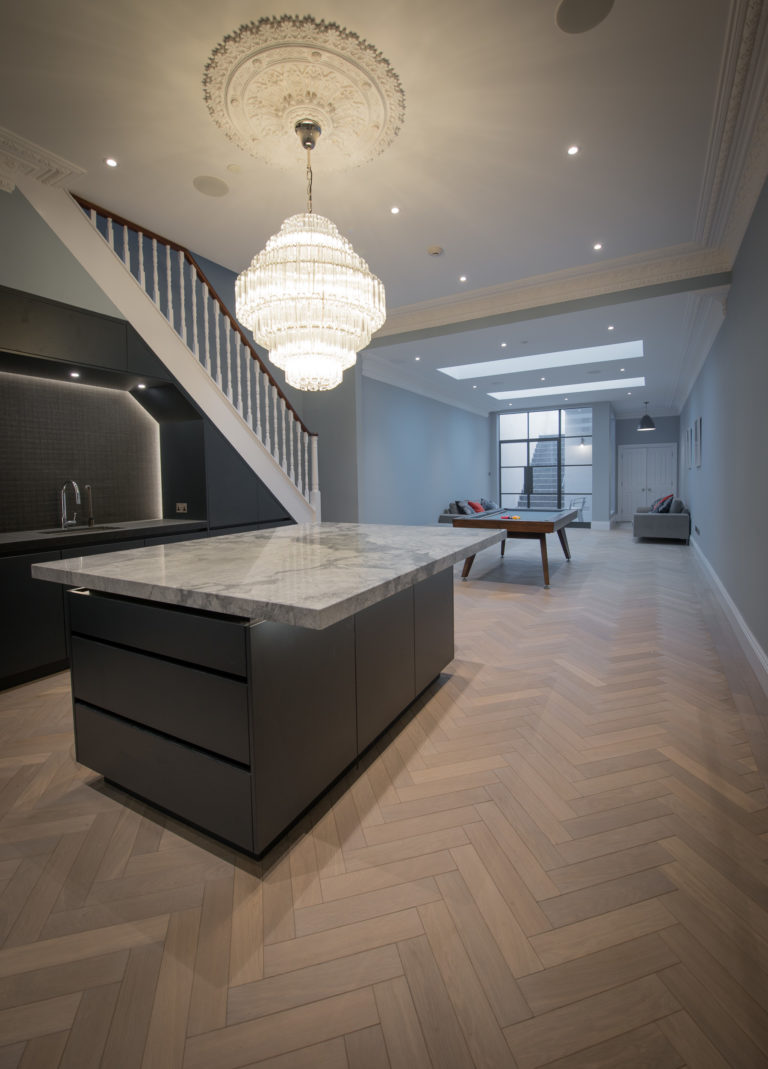
What size herringbone is best?
This is the first dilemma to consider that will effect the look.
- Extra narrow – A unique expect is to have fairly narrow widths at 45 – 65mm widths and longer lengths of 400 – 900mm
- 70 x 350mm – On the smaller side 350 x 70mm is a popular choice works well in smaller and medium sized rooms. Often used in school halls and other commercial settings. as it is more cost effective
- 90 x 450mm – This is a classic size and gives a more premium look. Works well in all small and large spaces.
- 90 x 700mm– Slightly longer, premium look and works well in all sized rooms. A preferred size in engineered format equally it is more economical in manufacturing.
- Oversized herringbone – 120 x 600 or 135 x 700mm or 150 x 700mm – these sizes are considered as oversized herringbone woods floor and will give a slightly more than contemporary await. Ideal for medium and large spaces.
- Extra large sized herringbone– 180 10 900 or 240 x 720mm. This extra big size gives a modernistic look and works well in large spaces such as an open plan living and kitchen room
What designs can you make with parquet battens?
- Single Herringbone – the standard design is to alternate the battens to 1 left and 1 correct.
- Diagonal Herringbone – laying the first row parallel to a wall. This is a unique and attractive look and can work well in small and large spaces
- 2 colour herringbone – using 2 colours tin can take a striking blueprint.
- Double Herringbone – this design requires to 2 battens to alternating at a time.
- Ladder pattern – laying the battens horizontally in a line with a single line of battens betwixt each row.
- Brick pattern – staggering the battens in a single row.
- Handbasket pattern – this requires the battens to take the lengths to be multiples of the width such as iii:1, 4:1 or v:1. Handbasket design can be installed square to the room or diagonal to the room.
Engineered wood herringbone or solid woods herringbone?
Parquet floor can exist manufactured in 3 formats
- Solid wood overlay parquet – overlay parquet is the oldest format and the near traditional method to installing parquet. Made from solid wood in approx nine-10mm battens. The installation method is regarded as the purest course to installing wood floors and has been used for centuries. Information technology is also requires the most expertise and patience from the client. This is not a project that can be rushed, the timber must be installed only one time the site weather are suitable, the timber is acclimatised, blueprint and layout considered. In one case installed the timber needs to settle earlier any filling tin be done and final sanding, priming and finishing. Choose this selection if you don't have underfloor heating and would like a simple colour or clear cease as it is not possible to reach complex colours when applying on site.
- Engineered wood herringbone – the demand for underfloor heating, complex factory finished colours and the need to get projects completed quickly mean that this format is at present the virtually popular blazon of parquet.
- Solid wood block parquet – typically 18 – 20mm thick and oftentimes with a tongue and groove contour. Our view is that this type of herringbone is superfluous. The thickness of the blocks will cause them to be more than prone to expansion and contraction, resulting in gaps betwixt the blocks. Just considering the blocks are thicker does not mean they volition final longer as your clothing layer on a natural language and groove block is just upwards to the tongue giving maximum 8-10mm which is no more than a 10mm overlay floor which is more stable.
Direction to lay herringbone parquet
The direction of the pattern is of import. Look for a focal point to help you make up one's mind, such as a fireplace, double doors, bay window and the shape of the room. Generally herringbone looks skilful downward the length of the room. However if you lot have a big patio doors looking out to a garden then it may work to betoken towards the garden.
Where to showtime laying parquet floors
You will have to decide where to showtime your design. Your first row should be centred to a focal point such as the center of a bay window or fireplace. Consider the impact the starting signal will have on other areas of the room as it may work meliorate to centre to the middle of a room to avert having small-scale pieces left on the side of the room. If yous are installing in multiple rooms without borders or thresholds then you volition need to decide the bear on it volition have on those rooms likewise. Call up houses rarely have straight walls or rooms that a exactly parallel to each other.
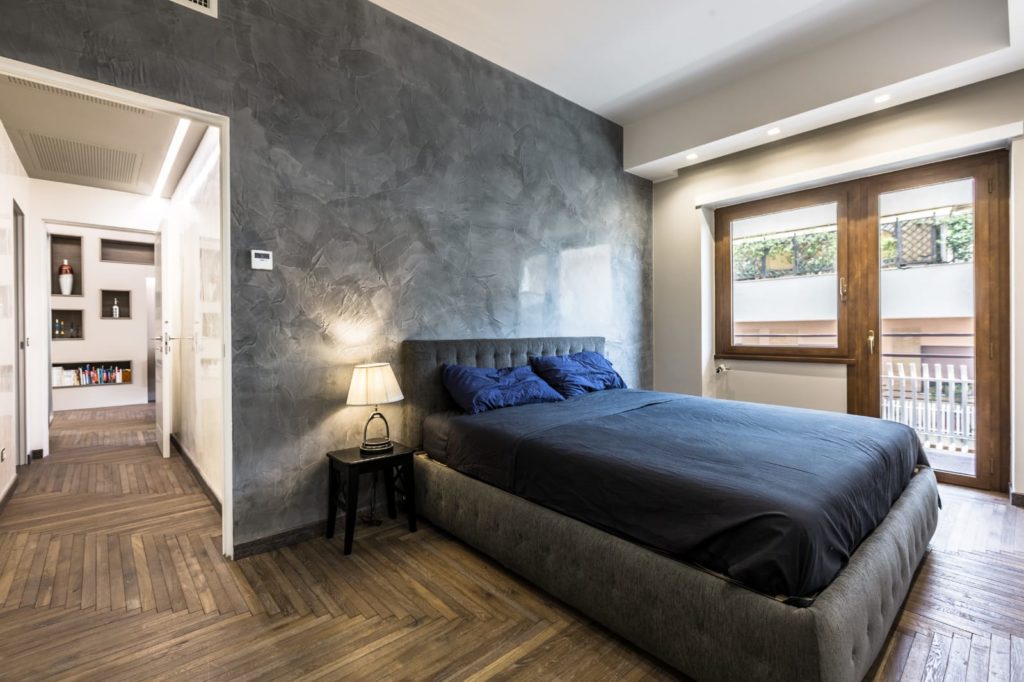
Do you need to take a border with parquet floors?
Parquet borders provide office other than merely being a decorative design. If yous are installing in multiple rooms without borders or thresholds so you will need to decide the impact information technology will have on those rooms likewise. Remember houses rarely have direct walls or rooms that are exactly parallel to each other. without a border the direction volition follow through into the next room and may not line upwards to a focal bespeak in that room or worse be out of alignment with a wall. A parquet border will allow you to cull a direction and starting point for each room giving total control over the design.
Design options for parquet borders include:
- Single line border – using a unmarried line border with battens parallel to walls
- 2 line border – using two rows of battens parallel to the walls. the benfit of using a 2 line border equally it tin hide uneven walls improve equally the kickoff row to the wall will accept out some the varation whilst leaving the inner row as a complete batten.
- plank border – using a long woods plank to create the edge
- ladder or bookend – turning the battens inward to brand a large border works well on larger rooms
- inset strips – inset strips such as contumely or using lighter/darket strips of timber volition provide an attractive effect.
- Decorative parquet borders – the design options in decorative borders are immense and varied. Options include Greek key border, lattice and intricate marquetry designs.
Source: https://urbaneliving.co.uk/herringbone-wood-flooring-design-guide/
0 Response to "Wooden Floors in Plan Drawing"
Post a Comment